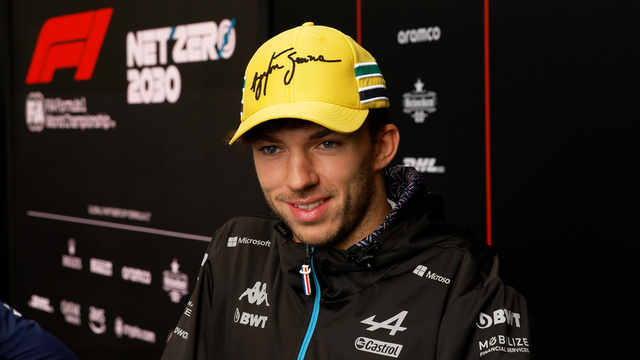
Remembering Pierre Gasly's Inaugural F1 Grand Prix at Sepang 2017
Every Formula 1 driver remembers their first Grand Prix. It's a pivotal moment, steeped in dreams, immense pressure, and the culmination of years of relentless effort. For French talent Pierre Gasly, that unforgettable experience arrived at the 2017 Malaysian Grand Prix in Sepang. This marked his entry into the pinnacle of motorsport, an event that, while perhaps not yielding immediate spectacular results, laid the crucial groundwork for a career that would later see him stand on the top step of the podium.
The journey to the F1 grid is arduous, filled with intense competition and countless sacrifices. When did Pierre Gasly start F1? His first Grand Prix revealed itself as a testament to his perseverance, undeniable talent, and the rigorous Red Bull Junior Team development program. This article delves into the circumstances surrounding his debut, the specific challenges he faced at the Sepang International Circuit, and how this initial experience profoundly shaped the driver we know today.
The Road to Sepang: Pierre Gasly's Ascent to Formula 1
Before donning the iconic Toro Rosso colours, Pierre Gasly had already carved out a formidable reputation in the junior categories. A prodigious talent hailing from Rouen, France, Gasly swiftly climbed the motorsport ladder, showcasing his exceptional speed and racecraft at every turn. His early career highlights included becoming the 2013 Eurocup Formula Renault 2.0 champion and, most notably, clinching the GP2 Series (now Formula 2) title in a dramatic 2016 season with Prema Racing.
As a key member of the Red Bull Junior Team, Gasly was firmly on the radar for an F1 seat. The junior programme is renowned for its tough but rewarding pathway, consistently identifying and nurturing future F1 stars. Gasly's championship success in GP2 made his F1 debut seem not just likely, but inevitable, though the exact timing and circumstances were often subject to the dynamic and often unpredictable world of Red Bull's driver management philosophy.
The opportunity for Gasly to make his F1 debut arrived mid-season in 2017. Following a series of inconsistent performances and various on-track incidents, Daniil Kvyat was temporarily dropped from the Toro Rosso team by Red Bull, opening a critical slot for a new driver. This sudden change created the perfect window for Gasly to step up, albeit with remarkably little notice, for the Malaysian Grand Prix. He was called back from Japan, where he was intensely battling for the Super Formula championship, to make the immediate transition to the intense world of Formula 1. This rapid call-up underscored Red Bull's unwavering faith in his abilities and his perceived readiness for the biggest challenge of his budding career.
Sepang 2017: A Baptism of Fire in Malaysia
The Sepang International Circuit, celebrated for its challenging layout, high ambient temperatures, and notoriously unpredictable tropical weather, was the chosen stage for Pierre Gasly's F1 Debut: A Look Back at Sepang 2017. This iconic Malaysian venue, which was sadly hosting its final Formula 1 race at the time, presented an exceptionally demanding environment for any rookie, let alone one stepping into the cockpit mid-season with minimal preparation.
For pierre gasly primeiro gp, the weekend was less about chasing points and more profoundly about critical acclimatization. The Toro Rosso STR12, powered by a Renault engine, was a respectable midfield contender, but learning its unique nuances, along with the complex characteristics of the Pirelli tyres and the sheer intricate complexity of an F1 car, all within such a condensed timeframe, was a monumental task. Gasly had only limited prior F1 experience, having completed a few test sessions. Jumping straight into a live race weekend without extensive prior preparation was a true and immediate test of his fundamental adaptability and mental fortitude.
- Practice Sessions: Gasly meticulously used the Friday practice sessions to familiarise himself with the incredibly powerful car, the demanding circuit, and the precise operational procedures of an F1 team during a live race weekend. Every single lap was an invaluable learning curve, from understanding optimal brake points to expertly managing tyre degradation in the scorching Malaysian heat and humidity.
- Qualifying: In qualifying, Gasly delivered a solid performance, placing 15th on the grid. While not a headline-grabbing result, it was a highly commendable effort for a rookie facing seasoned competitors and a completely new car. Impressively, he managed to outqualify his experienced teammate Carlos Sainz Jr. in Q1, an early and promising sign of his underlying raw pace, before Sainz went on to qualify 14th after Gasly's Q2 run.
- Race Day: The Malaysian Grand Prix itself proved to be a challenging yet character-building experience. Gasly completed the race in 14th position. Crucially, he avoided any major incidents and successfully brought the car home safely, which is often the primary and most vital objective for a debuting driver. The race was incredibly physically demanding, with the high humidity pushing drivers to their absolute limits. Successfully navigating 56 challenging laps, while simultaneously managing fuel, tyres, and intricate ERS systems, and battling wheel-to-wheel, provided him with invaluable real-world experience. His focus remained steadfast on gathering crucial data, understanding the complex race flow, and executing pit stops with precision.
This debut was a profound testament to his mental fortitude and professional composure. He wasn't expected to instantly set the world alight, but rather to demonstrate capability, consistency, and a strong, dedicated work ethic. He delivered exactly that, impressing the entire team with his calm, measured approach and keen, insightful feedback.
Beyond the Debut: Setting the Stage for a Storied Career
The pierre gasly primeiro gp at Sepang was merely the opening chapter in what has become a captivating and often dramatic F1 career. Following Malaysia, Gasly competed in four more races during the 2017 season, replacing Kvyat for some and then Brendon Hartley for others as Toro Rosso navigated its complex and evolving driver lineup. These subsequent races allowed him to build significantly on his initial experience, further refining his skills and deepening his understanding of the demanding world of F1 racing.
The 2018 season saw Gasly secure a full-time seat at Toro Rosso, where he truly began to shine, delivering a series of strong, consistent performances that earned him a highly anticipated, albeit ultimately challenging, promotion to Red Bull Racing for the 2019 season. While his stint at the senior team proved to be difficult and short-lived, his subsequent return to Toro Rosso (which was then rebranded as AlphaTauri) marked a profound turning point in his career. It was there, with renewed confidence and a familiar environment, that he achieved his sensational maiden F1 victory at the 2020 Italian Grand Prix. This triumph was not just a win; it was a powerful statement that cemented his status as a Grand Prix winner and unequivocally proved his immense resilience and raw talent.
His journey since Sepang 2017 has been one of continuous growth, unwavering resilience, and remarkable achievement. From navigating the initial complexities of a debut to conquering the immense challenges of a top team and ultimately finding his rhythm and winning races, Gasly has evolved into a highly respected and admired figure in the Formula 1 paddock. His inaugural race, while not featuring on spectacular highlight reels, was the silent, crucial first step that set everything else into motion. It was the moment he definitively proved he belonged among the elite.
Key Takeaways from a Rookie Debut in Formula 1
A Formula 1 debut is far more than just another race; it represents a profound and life-altering transition. For any aspiring racing driver, understanding what truly goes into that first Grand Prix can offer invaluable insights. Here are some key takeaways and observations:
- Immense Pressure: New drivers face an almost unimaginable amount of scrutiny. They must perform at the highest level under the intense global spotlight while simultaneously learning the intricate complexities of the most advanced racing machines on the planet. Gasly handled this pressure with remarkable maturity, focusing intensely on the immediate task at hand rather than succumbing to external expectations.
- Steep Learning Curve: F1 cars are vastly, fundamentally different from those in junior formulas. The sheer power, sophisticated aerodynamics, nuanced tyre management, and profound strategic depth all require rapid and precise adaptation. A debut is primarily about absorbing as much information as humanly possible, not necessarily about delivering instant podium finishes.
- Critical Team Integration: Beyond the act of driving, a rookie must rapidly and effectively integrate with a large, multinational F1 team. Effective and clear communication with engineers, mechanics, and strategists is absolutely paramount. Gasly's ability to provide concise and actionable feedback was crucial for his early development and integration.
- Extreme Physical and Mental Demands: Sepang, in particular, is one of the most physically draining circuits on the F1 calendar due to its relentless heat and suffocating humidity. Completing a full F1 race requires peak physical condition and unwavering mental focus, serving as a brutal test of a driver's true readiness for the sport.
- Long-Term Perspective: Not every debut is a blockbuster success. The true measure of an F1 career often comes over time, through consistent learning, relentless improvement, and unyielding resilience. Gasly's journey perfectly illustrates that a modest, well-executed start can indeed lead to significant and lasting achievements.
Practical Tip for Aspiring Drivers: Focus intensely on consistency, diligently avoid costly errors, and consistently provide clear, actionable feedback to your engineers. These foundational elements are often more highly valued by top teams than one-off flashes of brilliance from a rookie.
Interesting Fact: The 2017 Malaysian Grand Prix was the last Formula 1 race ever held at the Sepang International Circuit, making Pierre Gasly one of the very last drivers to debut at this historic and beloved venue.
The Enduring Legacy of Pierre Gasly's Sepang Debut
The 2017 Malaysian Grand Prix marked the pivotal moment when pierre gasly primeiro gp transitioned from a dream to a reality. It wasn't a race that defined his career in terms of immediate results, but it was the absolutely essential first step, a foundational experience that meticulously prepared him for the intense challenges and eventual triumphs that lay ahead. From the gruelling demands of Sepang to the exhilarating euphoria of a Grand Prix victory, Gasly's journey epitomizes resilience, determination, and the relentless pursuit of excellence in the fiercely competitive world of motorsport.
His debut demonstrated not just his natural driving talent, but also his remarkable capacity for hard work, rapid adaptation, and unwavering mental toughness – all qualities that are indispensable for a truly successful and enduring F1 career. As fans look back on his remarkable accomplishments, Sepang 2017 remains a significant, albeit understated, milestone in the compelling and ever-unfolding story of Pierre Gasly.